
EBAY WHOLESALE SOURCING
eBay vs Amazon — Which Platform is Better for Wholesale Sellers?
By Brandhunterz Ltd | Company No: 15342697 | 13 minute read
Affiliate Disclosure: This article contains affiliate links. If you purchase through our links we may earn a commission at no extra cost to you. We only recommend tools we genuinely use and believe in. Read our full disclaimer.
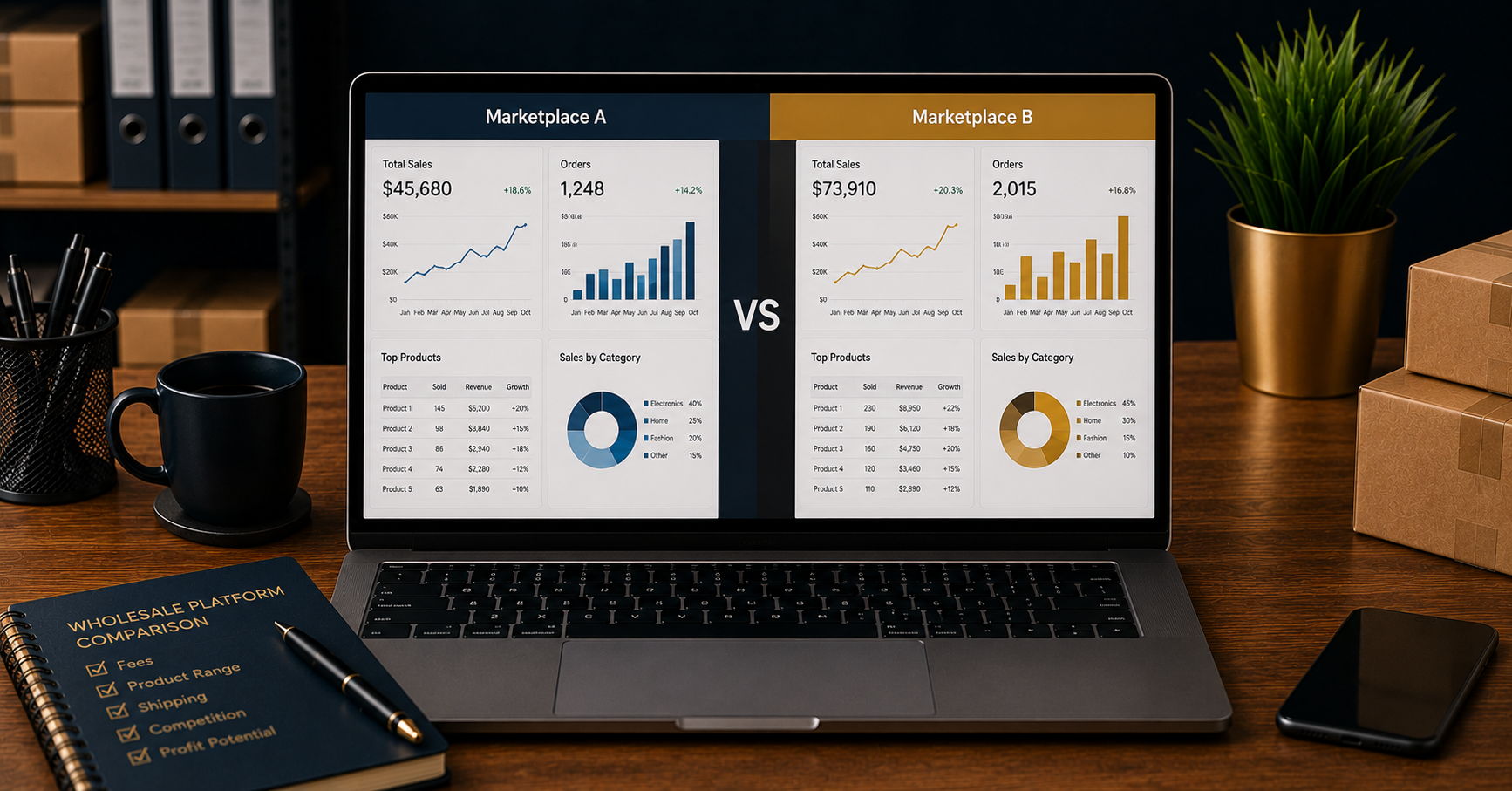
eBay vs Amazon is one of the most common questions wholesale sellers ask when deciding where to build their business. Both platforms offer enormous sales potential for wholesale sellers — but they operate very differently, have different fee structures, different buyer behaviours and different competitive dynamics. Choosing the right platform — or the right combination of both — can significantly impact your margins, your workload and the long-term sustainability of your business.
We are Brandhunterz Ltd — a UK registered wholesale sourcing company (Company No: 15342697) — and we help wholesale sellers build profitable businesses on both platforms. In this complete comparison guide we break down every key difference between eBay and Amazon for wholesale sellers and give you a clear framework for deciding which platform is right for your situation.
💡 Quick Summary
Amazon offers higher sales volume, FBA fulfilment and stronger brand recognition but has higher fees, more competition and complex account requirements. eBay offers lower fees, easier setup, less competition per listing and more seller control but lower traffic volume and manual fulfilment. The best wholesale businesses use both platforms simultaneously to maximise revenue from every wholesale account they hold.
Platform Overview — Amazon vs eBay by the Numbers
| Metric | Amazon UK | eBay UK |
|---|---|---|
| Monthly unique visitors | 300M+ | 130M+ |
| Active buyers UK | 30M+ | 20M+ |
| Seller fees (approx) | 25 to 35% total | 13 to 16% total |
| Monthly seller fee | £34.99/month | From £25/month |
| Fulfilment option | FBA — hands free | Self-fulfilled or 3PL |
| Competition per product | Very high | Lower |
| Account setup complexity | High | Low |
| Gated categories | Many — approval needed | None for most categories |
Fee Comparison — Where Your Money Actually Goes
The fee difference between Amazon and eBay is one of the most significant factors for wholesale sellers. Higher fees mean you need a higher selling price or a lower wholesale buy price to achieve the same profit margin. Here is a direct fee comparison on the same £14.99 product:
| Fee | Amazon FBA | eBay |
|---|---|---|
| Referral / Final Value Fee | £1.20 (8%) | £1.92 (12.8%) |
| Fulfilment Fee | £2.10 (FBA) | £2.80 (postage) |
| Storage Fee | £0.10 | £0.00 |
| Monthly Subscription | £34.99/month | £25/month |
| Total Per Unit Cost | £3.40+ | £4.72+ |
💡 Key Insight on Fees
Amazon’s FBA fulfilment fee replaces your postage cost — so the true fee comparison is closer than it first appears. On small lightweight products eBay’s self-fulfilment postage can exceed Amazon’s FBA fee. The real advantage of eBay fees is on higher-value products where Amazon’s percentage-based referral fee and FBA fees combined become significantly more expensive per unit.
The Buy Box vs Best Match — How Each Platform Allocates Sales
One of the most important structural differences between Amazon and eBay for wholesale sellers is how each platform decides which seller gets the sale when multiple sellers offer the same product.
Amazon — The Buy Box System
On Amazon all sellers offering the same product share a single listing. Only one seller holds the Buy Box at any given moment — receiving the vast majority of sales. Buy Box allocation is based on fulfilment method, price, account health and stock availability. FBA sellers have a significant structural advantage. Use Keepa to analyse Buy Box history on any listing before deciding to sell on Amazon.
eBay — The Best Match System
On eBay every seller creates their own individual listing for the same product. eBay’s Best Match algorithm ranks listings based on relevance, price, seller feedback, handling time and listing quality. Unlike Amazon there is no single winner — multiple sellers can all appear in search results and all receive sales. This means eBay is structurally less winner-takes-all than Amazon and new sellers can compete more fairly from the start.
| Factor | Amazon Buy Box | eBay Best Match |
|---|---|---|
| Sales distribution | Winner takes 80%+ of sales | Multiple sellers all receive sales |
| New seller disadvantage | High — history matters significantly | Low — listing quality matters more |
| Price competition | Critical on non-MAP listings | Important but not the only factor |
| Research tool | Keepa | Zik Analytics |
Fulfilment — FBA vs Self-Fulfilment
Fulfilment is one of the biggest practical differences between selling on Amazon and eBay as a wholesale seller.

Amazon FBA — Hands-Free Fulfilment
Amazon FBA handles all picking, packing, shipping, customer service and returns on your behalf once your stock is in their warehouse. As your sales volume grows Amazon scales with you at no additional effort. The downside is the FBA fee structure — particularly for heavier or larger products — and storage fees that accumulate if stock moves slowly.
eBay — Self-Fulfilment
eBay sellers fulfil orders themselves — storing stock at home or in a warehouse, packing each order individually and booking couriers for each shipment. At low volumes this is manageable and keeps costs low. At higher volumes the time investment becomes significant and many growing eBay wholesale sellers transition to a third-party logistics provider — a 3PL warehouse that stores and ships on their behalf.
| Volume Level | Amazon FBA | eBay Self-Fulfilment |
|---|---|---|
| 1 to 20 orders/day | Excellent — fully hands free | Very manageable from home |
| 20 to 50 orders/day | Excellent — no change needed | Manageable but time-consuming |
| 50+ orders/day | Excellent — Amazon scales for you | Move to 3PL — home fulfilment unsustainable |
Product Research — Different Tools for Different Platforms
Researching products for Amazon and eBay requires different approaches and different tools because the data you need is platform-specific.
| Research Need | Amazon Tool | eBay Tool |
|---|---|---|
| Sales history and demand | Keepa | Zik Analytics |
| Fee and margin calculation | AMZScout or Helium 10 | Zik Analytics built-in calculator |
| Sell-through rate | BSR and Keepa drops | Zik Analytics sell-through % |
| Competitor analysis | Helium 10 | Zik Analytics competitor view |
Account Setup and Requirements
Amazon — More Complex Setup
Amazon requires identity verification through a Know Your Customer process including government ID upload, bank statement submission and sometimes a video verification call. The process takes 1 to 5 business days. Some product categories require ungating — additional approval before you can sell certain brands or categories. The Professional Seller account costs £34.99 per month from day one.
eBay — Simpler and Faster Setup
eBay business account registration is significantly simpler — typically completed in under 30 minutes with no identity verification process required upfront. You can list and sell immediately after registration. The main limitation for new eBay sellers is selling limits — eBay restricts the number of items and total value new accounts can list per month until you build a positive selling history. These limits increase automatically as you build positive feedback.
Which Platform is Right for You?
The answer depends on your specific situation. Use this decision framework:
PLATFORM DECISION FRAMEWORK
Start on eBay if you are a complete beginner with under £1,000 starting capital
→ Lower fees lower risk faster setup and no FBA complexity. Research products with Zik Analytics and build your supplier relationships before adding Amazon.
Start on Amazon if you have £1,500 or more and want maximum sales volume
→ Amazon’s larger buyer base and FBA fulfilment give you higher potential sales. Research every product with Keepa and validate margins with AMZScout or Helium 10.
Sell on both if you are established and want to maximise revenue from every supplier
→ The same wholesale stock listed on both Amazon and eBay generates two revenue streams from one supplier relationship. Use Zik Analytics to evaluate eBay demand alongside your Keepa Amazon research for every product.
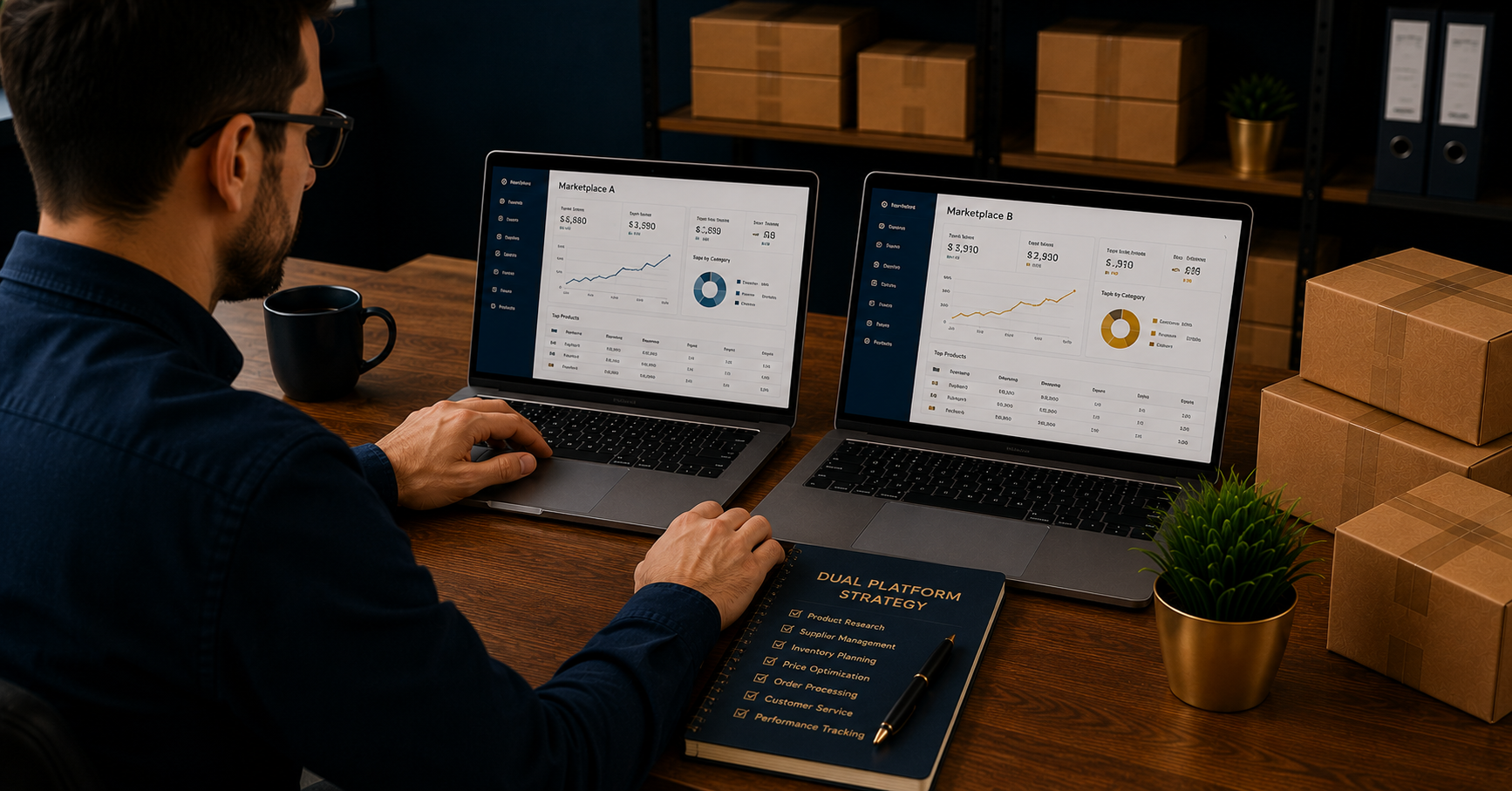
The Dual Platform Strategy — Maximum Revenue From Every Wholesale Account
The most commercially efficient approach for established wholesale sellers is to sell the same products on both Amazon and eBay simultaneously. This strategy extracts maximum revenue from every wholesale account without requiring additional supplier relationships — you simply split your stock order between Amazon FBA and eBay self-fulfilment.
| Benefit | How it Works |
|---|---|
| Double revenue channels | Same wholesale product generates sales on two platforms |
| Higher order quantities | Larger orders unlock better wholesale pricing and terms |
| Platform risk diversification | Amazon account issue does not kill all revenue — eBay continues |
| Clearance channel | Slow-moving Amazon stock can be cleared on eBay |
| Stronger supplier relationship | Higher combined order volumes improve your standing with brands |
Conclusion — Not Either Or But Both
The eBay vs Amazon debate is ultimately a false choice for established wholesale sellers. Both platforms serve different buyer segments, have different competitive dynamics and offer different advantages. The most successful wholesale sellers use both — starting on whichever platform best matches their starting capital and experience level and expanding to the other as their business grows.
Research every product for both platforms before ordering — use Keepa for Amazon demand and Zik Analytics for eBay demand. Validate all margins with AMZScout or Helium 10. And find verified wholesale brands for both channels through our Brands Directory.
FIND WHOLESALE BRANDS FOR EBAY AND AMAZON
Browse 5,000+ Verified Wholesale Brands Free
Every brand in the Brandhunterz Directory works for both Amazon and eBay wholesale selling — all verified as authentic and reseller-friendly across UK and USA markets.
About the Author
This article is written by the team at Brandhunterz Ltd — a UK registered Amazon FBA wholesale sourcing company (Company No: 15342697) registered in England and Wales since 2023. Visit brandhunterz.com to learn more.